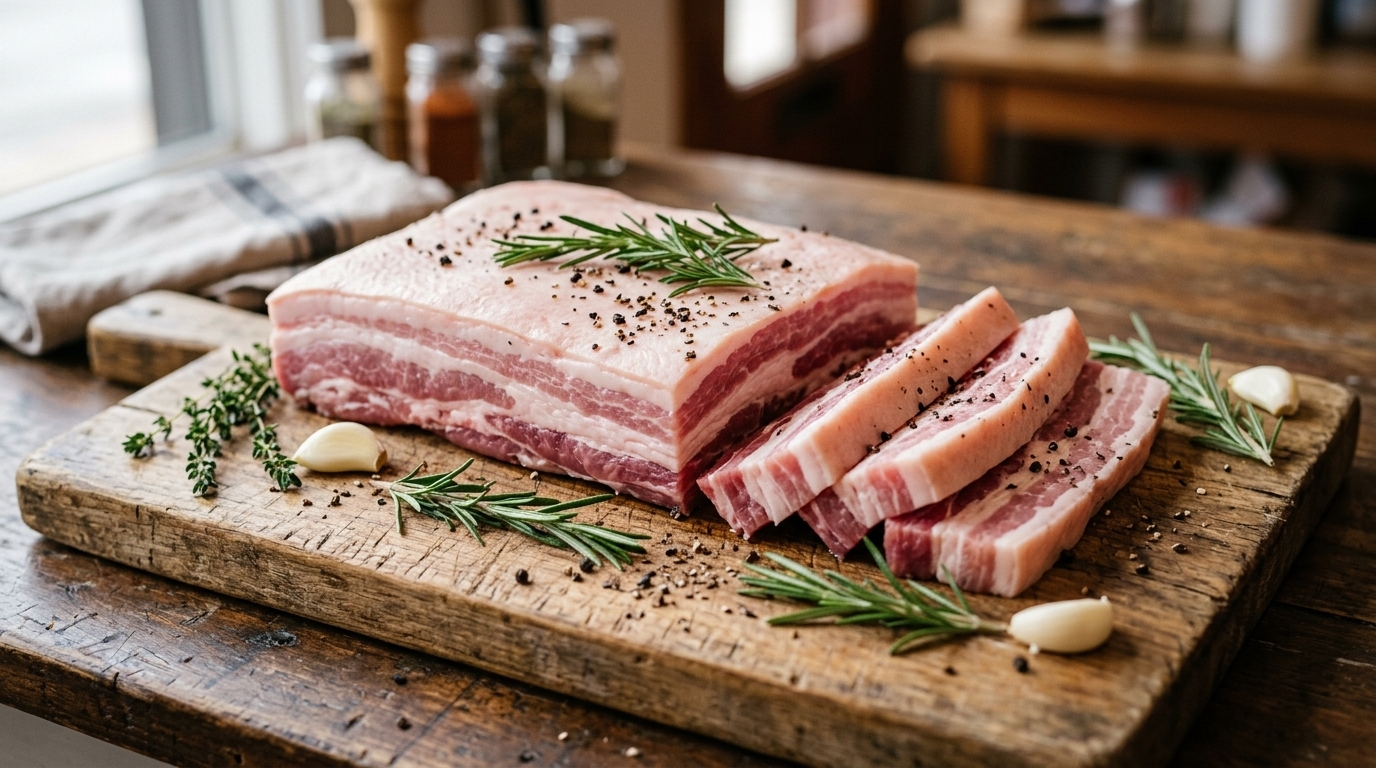
Pork side meat, in simple words, is the raw cut taken from a hog’s belly, before any curing or smoking happens to it. It carries a deep, natural pork taste, and the fat layer on it turns crisp and golden the moment it touches a hot pan. Many people also call this same cut pork belly, and that’s fine too. It is the same meat, only the name changes depending on where you grew up or who is selling it to you.
What This Cut Really Is
This meat comes from the underside part of the pig, from the area where spareribs sit before the butcher removes them. The main difference between this and bacon is in what happens after cutting. Bacon goes through pumping with cure, then sits inside a smoker for many hours, sometimes for days together. Side meat, on the other hand, skips all of this process completely. It stays raw and untouched, so the taste comes closer to an ordinary pork chop rather than the salty, smoky flavor found on a breakfast plate.
Since no curing takes place, this cut does not stay fresh for long in the fridge. Because of this, most people either cook it within one or two days, or they freeze it for later use. You will also notice it gets cut in different styles, thin slices for people wanting that bacon type crunch, and thicker pieces for those planning a slow roast or braise.
Why the Fat Layer Matters
Among all pork cuts, the belly holds the highest amount of fat, and this is actually the main reason people choose it. This fat should never get trimmed away. As heat touches it, the fat melts down slowly, and while melting, it bastes the meat from inside out. That is exactly why a properly cooked piece turns crispy outside while staying tender and juicy inside.
One point worth remembering: since so much fat sits right on the surface, this cut cooks quickly from outside. If the heat stays too high for too long, the edges will burn before the inside gets properly cooked.
Common Cooking Methods
Pan frying remains the easiest method most people use. A little salt, pepper, sometimes a light flour coating so grease does not splatter everywhere, then straight into a hot pan for around two to three minutes on each side until crispiness develops.
For thicker cuts, the low and slow method works better. Roasting or grilling under gentle heat allows the fat enough time to render fully, giving a deep caramelized crust instead of burnt outer parts with raw fat trapped inside. Some cooks avoid frying entirely, choosing instead to cube the meat into stews or soups, letting it break down slowly over an hour or two so the whole dish becomes richer because of it.
Side Meat, Pork Belly, and Bacon: Understanding the Difference
People often use these three names as though they mean one single thing, and in most cases, that assumption is not wrong, just at different stages of preparation. Pork belly refers to the cut in its most basic, raw state. Side meat means the same cut, though this particular name appears more often in home cooking and older traditional recipes, especially the ones where meat undergoes dry curing rather than sitting in brine. Bacon, meanwhile, is what remains after both curing and smoking get completed. So basically, every bacon piece began its life as side meat, though not every side meat piece turns into bacon eventually.
Where This Cut Fits in Daily Cooking
Because it has not gone through curing, raw side meat functions more like a blank canvas rather than a ready ingredient. Throw thin strips of it into a stir fry, and it will bring richness to whatever vegetables or rice sit in that pan. Cut it into small dice and add it to pasta for extra depth of flavor. Let it simmer inside a stew, and slowly it melts into the broth as time passes. Many older recipes even render the fat out separately first, then cook other ingredients directly in those drippings, something not really possible with leaner meat cuts.
In Summary
Side meat gives home cooks far more control than any store bought bacon package ever could offer. It begins plain, meaning you get to decide its final direction, whether seasoned and fried, smoked at home, roasted low and slow, or simmered into something warm during a cold evening. Once the understanding builds around where this cut comes from and how its fat behaves under heat, cooking it stops feeling like guesswork and starts producing results the way you actually want, be it a fast crispy side dish or a stew pot that has been simmering the entire afternoon.