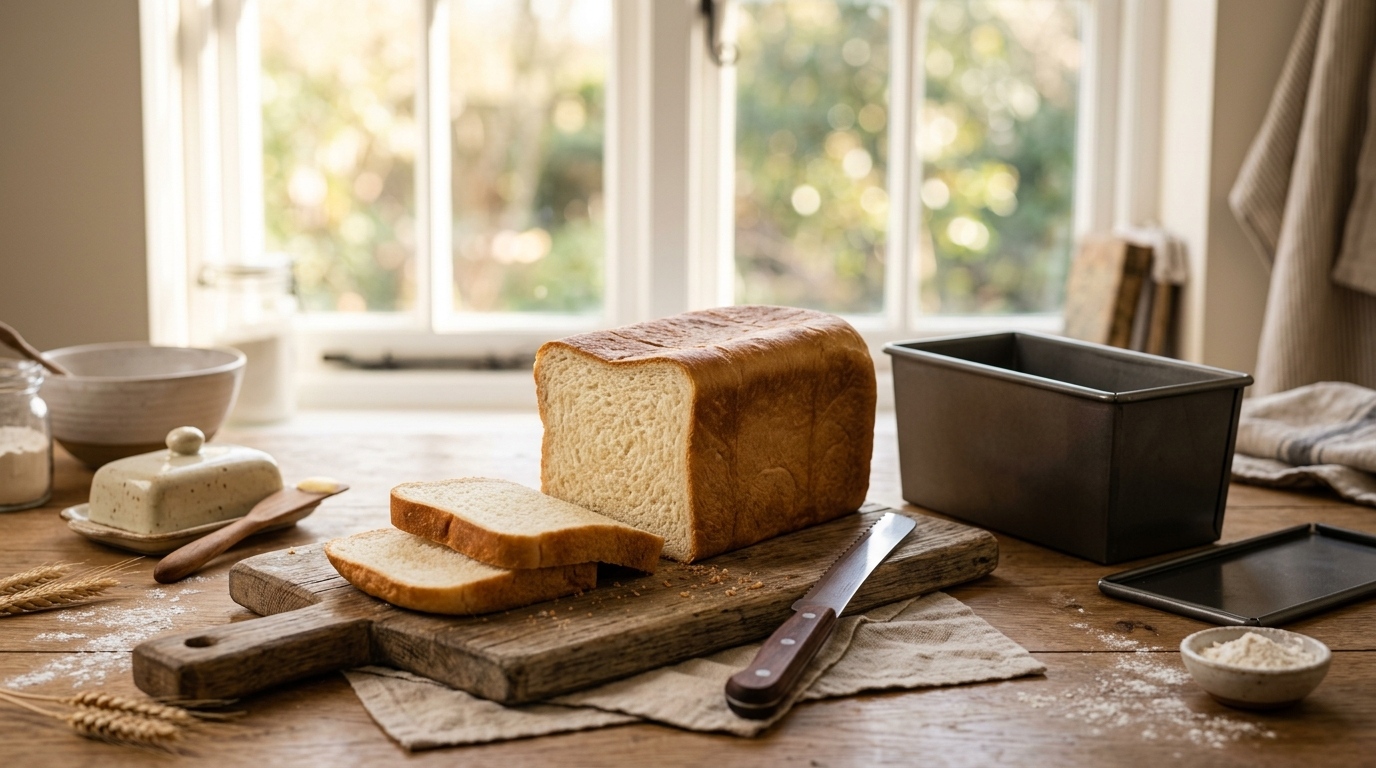
A good Pullman loaf recipe turns out a nearly perfect square, with a tight, even crumb and a crust so thin you barely notice it’s there. At Baker’s Table, people ask about this bread more than almost any other, and usually it’s because the loaf they pull out of the oven looks nothing like what they’re used to. That shape isn’t accidental. The dough bakes inside a lidded pan, so rather than ballooning up and out, it’s forced to rise straight against flat walls. Clean, even slices come from that, and it’s exactly why this shape became the standard for sandwich bread, toast, and anything else where thick, chewy crust would just get in the way.
Where the Name Actually Comes From
Pullman train cars — that’s the short version. Those old railway carriages were famous for their tight, boxy, efficient design, and at some point bakers noticed their bread was baking up with that same rectangular shape in an enclosed pan. From there, the name simply stuck. In French, you’ll hear it called pain de mie, which translates roughly to “bread of the crumb,” and that name gets at something real: the interior is the whole point of this bread. Crust is almost an afterthought. However you refer to it, the loaf is built from the inside out.
The Pan Is Doing Most of the Work
Talk to any baker who has made this style more than once, and the pan, not any single ingredient, is what they’ll point to first. Long and narrow, a Pullman pan comes with a lid that slides shut right over the dough as it bakes, and that lid is really the whole trick. Because it keeps the top from doming the way a regular loaf would, every slice ends up the same height. It also traps steam against the dough while it cooks, and that’s what keeps the crust thin and the crumb from drying out. Without the lid, you’re left baking a regular loaf, one with a rounded top and a noticeably thicker crust.
Why the Inside Is So Dense and Even
Compared to a rustic, holey loaf, the tight, uniform crumb here often surprises first-time bakers once they slice in. A couple of things are happening at the same time to produce that. In the dough, milk and butter soften the gluten just enough that big, irregular air pockets never really get the chance to form. Meanwhile, the pan is boxing the dough in, so the gas building up during proofing spreads across many tiny, even pockets instead of stretching into large bubbles. Together, those two things give you that fine, almost velvety texture, ideal for sandwiches, rather than the open, airy crumb you’d expect from something like a baguette.
What the Enrichment Is Actually For
An enriched dough is what bakers call this kind of recipe, since fat, sugar, and dairy get mixed in alongside the usual flour, water, and yeast, and none of that is there just for flavor. For the yeast, sugar provides extra food, and it also helps the crust brown properly once it’s finally exposed to heat near the end of baking. As for butter, that’s what keeps the crumb soft for days after the loaf leaves the oven, not just on the first day. Milk, meanwhile, rounds out the flavor and softens the texture even further — which explains, in part, why this bread resists going stale or crumbly nearly as fast as a lean, water-based loaf would.
Sourdough Versions and Whole Wheat Swaps
Using a sourdough starter instead of commercial yeast, plenty of home bakers now make this same shape, though the timeline runs much longer, often with an overnight rise built in. In exchange for the wait, you get a deeper, slightly tangy flavor along with a bit more chew than the classic version brings. Whole wheat flour also finds its way into this bread, though it demands a little more care, since gluten development can be weakened by the bran in whole wheat. Rather than going all-in on whole wheat, most bakers blend it with bread flour, just enough to keep the dough strong enough to actually fill out the corners of the pan.
Why Temperature Beats Guesswork
Since this loaf bakes with a lid on for most of its time in the oven, the usual visual cues you’d rely on with a regular bake simply aren’t there. A glance at the crust won’t tell you it’s done. For that reason, most experienced bakers check internal temperature rather than going by the clock, and a fully baked loaf typically lands somewhere in the high 190s Fahrenheit at the center. If you pull it too soon — even when it looks golden once the lid finally slides off — a gummy center is what you’ll end up with, since dough this enriched needs that extra internal heat to fully set.
The Real Payoff Is Consistency
What really sets this bread apart from a typical homemade loaf comes down to how repeatable it is. One loaf ends up looking almost identical to the next, largely because the pan is doing so much of the shaping work, which is exactly why commercial bakeries were using this method long before it ever showed up in home kitchens. If there’s one reason to actually learn this recipe, that’s it: sandwich bread that looks the same and slices the same, loaf after loaf.