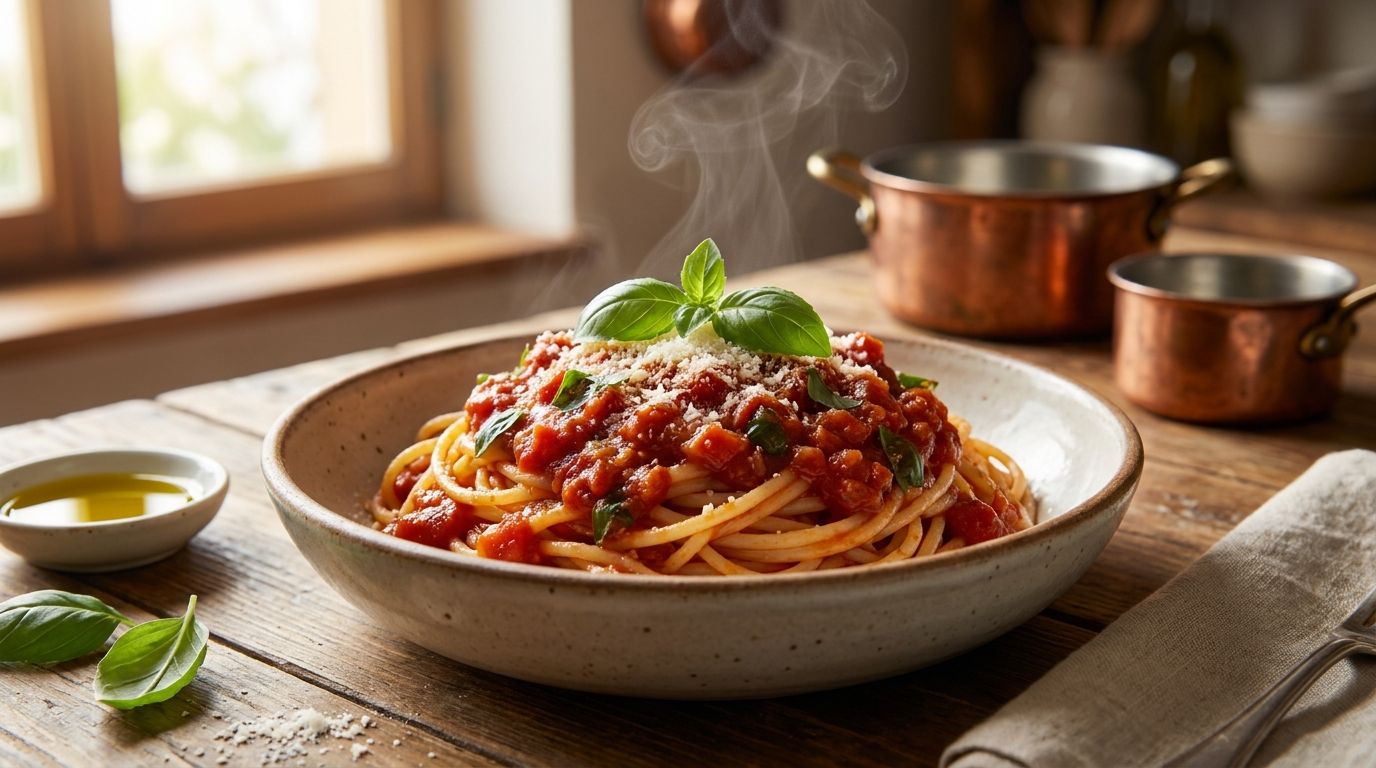
Pasta night does not have to end just because you cut out gluten. Gluten free spaghetti has genuinely come a long way, and if your last experience with it was a soggy, flavorless disaster, that was probably years ago. The stuff available now is actually good. Barilla helped normalize it for mainstream shoppers, and since then the market has exploded with options made from rice, corn, chickpeas, lentils, and more. So whether you have celiac disease, feel terrible after eating wheat, or just want to experiment, there is a version out there that works for your plate.
What It Is Actually Made From
Swap out the wheat flour and you need something else to hold the noodle together. Most brands go with a rice and corn flour blend because it gets closest to that neutral, slightly chewy texture people expect from spaghetti. And for a lot of people, that is enough.
But there is a whole other world beyond rice and corn. Chickpea spaghetti. Lentil spaghetti. Brown rice. Quinoa blends. Cassava. Each one behaves differently in the pot and tastes a little different on the fork. Chickpea and lentil versions pack in way more protein and fiber, which matters if you are trying to get more out of your meals without adding meat. Brown rice pasta is probably the most forgiving to cook and has a flavor mild enough that it disappears into whatever sauce you put on it.
It Cooks Differently and That Part Matters
This is where people mess it up. Gluten is the thing that gives regular pasta its structure and keeps it from falling apart. Without it, gluten free spaghetti is more delicate and less forgiving if you walk away from the stove.
Most varieties need somewhere between 10 and 12 minutes. Start tasting at 8. The noodles keep softening after you drain them, so pulling them out a minute early is not a bad call. Stir more often than you think you need to, especially in the first couple of minutes, because these noodles stick together fast. Once you drain them, get them into the sauce immediately. Letting them sit in the colander for even a few minutes means clumping, and clumping means a frustrating dinner.
Some people do a quick rinse after draining to cut the stickiness. It helps a little. But a long rinse cools everything down and strips away the surface starch that makes sauce actually stick to the noodle. Short rinse or skip it entirely and just move fast.
Who Is Actually Eating This
People with celiac disease make up a big part of the audience. For them, gluten is not just uncomfortable, it actively damages the small intestine every time it gets consumed. Even cross-contamination from a shared cutting board or pot can cause a reaction. Certified gluten free labeling exists specifically for this reason and it is not something to overlook if celiac is in the picture.
Then there is a larger group with what gets called non-celiac gluten sensitivity. No autoimmune damage, but plenty of real symptoms like bloating, brain fog, and fatigue that show up pretty consistently after eating wheat. For these people, switching to gluten free pasta is not dramatic, it just makes them feel better.
And beyond both of those groups, a lot of people eat it for reasons that have nothing to do with a diagnosis. People eating paleo or whole food diets, athletes paying close attention to gut health, anyone doing an elimination diet to figure out what their body likes. Gluten free spaghetti fits across a wide range of eating patterns without much effort.
What You Are Getting Nutritionally
A corn and rice blend lands pretty close to regular pasta, calorie-wise. Around 200 calories per serving, moderate carbs, not a lot of protein. It is a decent base but nothing special from a nutrition standpoint on its own.
Chickpea or lentil spaghetti is a different story. The protein per serving jumps up noticeably, the fiber is higher, and you get better iron and folate numbers too. For someone eating mostly plant-based meals, that shift is worth paying attention to.
One thing that gets repeated a lot is the idea that gluten free automatically means healthier. It does not. If your body handles gluten fine, switching pasta varieties does not give you some nutritional edge. Some enriched wheat pastas are actually more nutrient-dense than their gluten free equivalents. The case for making the switch is about how your body responds, not about the label on the front of the box.
Conclusion
Gluten free spaghetti is not a compromise anymore. The texture is better, the options are wider, and it fits into real cooking without a lot of extra work. You still need to pay attention when it cooks, and not every brand or base flour is going to suit your taste on the first try. But that is true of regular pasta too. Give it a few tries with different varieties and you will probably find one that becomes a regular in your kitchen.