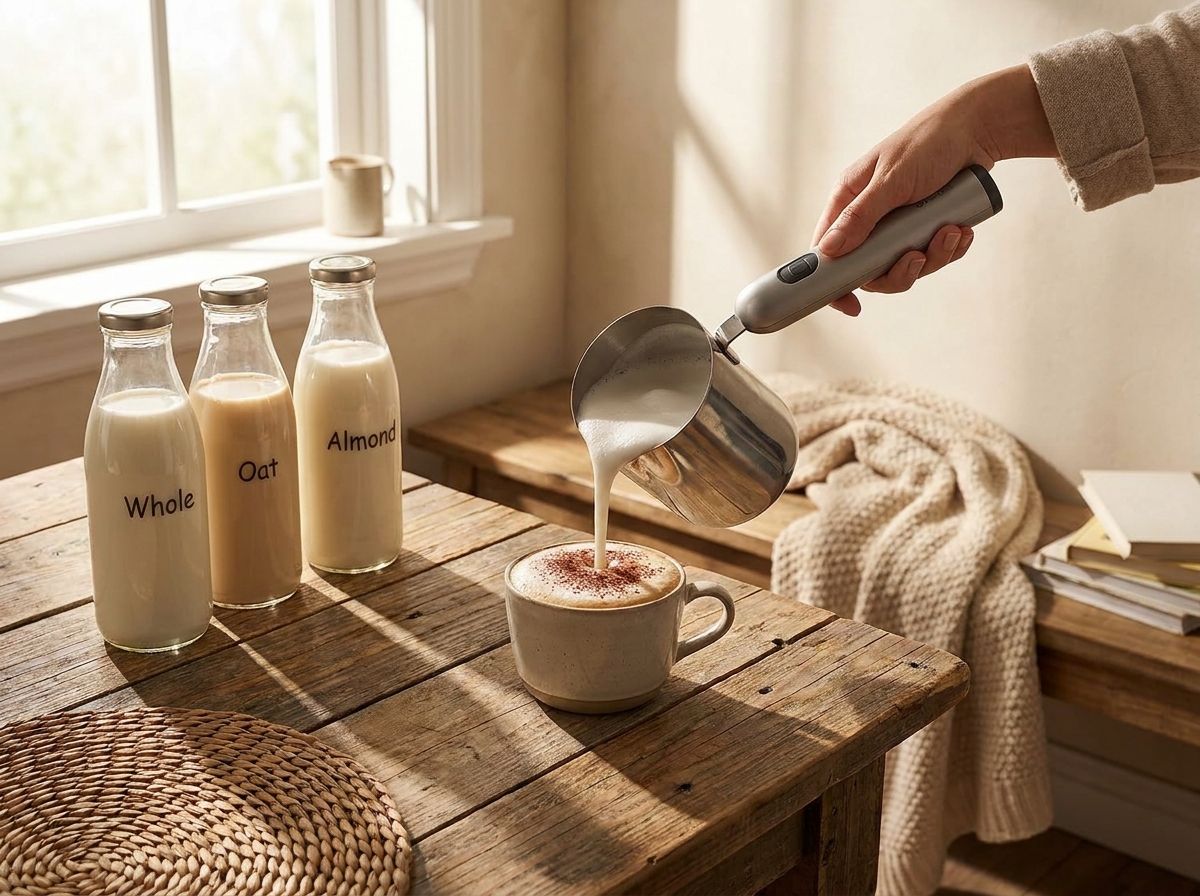
If you’re tired of flat, watery lattes, the answer is simpler than you think. Whole milk is the undisputed king for frothing. Its mix of fats and proteins creates that thick, velvety microfoam that stays put. If you’re dodging dairy, Barista-style Oat Milk is your best bet—it’s the only plant milk that really “stretches” like the real deal.
I’ve spent way too much time experimenting with different cartons, and I’ve realized that the “why” matters just as much as the “what.” Here is the lowdown on getting that café-quality foam without leaving your kitchen.
The Dairy Breakdown: Why Fat is Your Friend
When you froth dairy, you’re essentially playing with chemistry. The proteins act like a net to catch air, while the fat makes the bubbles tiny and smooth.
-
Whole Milk: This is the gold standard. It’s rich, sweet, and gives you that “glossy” look. If you want to try your hand at latte art, start here.
-
2% Milk: It’s a decent backup. It actually foams up faster than whole milk because it’s lighter, but the bubbles are a bit more “stiff” and less creamy.
-
Fairlife (The Secret Weapon): Seriously, try this. Because it’s ultra-filtered, it has a massive protein punch. The foam is so stable you could almost eat it with a spoon.
The Best Plant-Based Swaps (That Actually Work)
Let’s be honest: most “standard” nut milks are a disaster in a frother. They usually just turn into hot water with a few sad bubbles on top. If you’re going plant-based, you have to be picky.
-
Oat Milk (The Barista’s Favorite): Specifically the “Barista Editions” from brands like Oatly or Califia. They add a tiny bit of oil to mimic the fat in dairy, which is the secret to that silky texture.
-
Soy Milk: It’s the OG for a reason. High protein means a very reliable, thick foam. Just know that it has a distinct “beany” flavor that might change how your coffee tastes.
-
Almond Milk: Use it for the flavor, not the foam. Unless it’s a barista version, it tends to separate and get “fizzy” rather than creamy.
My Top 3 Tips for Perfect Foam Every Time
I’ve learned these the hard way so you don’t have to:
-
Keep it Frigid: Don’t let your milk sit on the counter. Use it straight from the fridge. Cold milk gives you more time to air it out before it hits the “danger zone” temperature.
-
Don’t Burn the Milk: If your milk feels too hot to touch, you’ve gone too far. Aim for around 150°F. Anything hotter and the milk “breaks,” the foam dies, and it starts to taste weirdly cooked.
-
Tap and Swirl: This is the pro move. Tap the bottom of your cup on the counter to kill the big bubbles, then swirl it. It makes the foam look like wet paint—pure luxury.
Conclusion
If you want the best results today, go buy a carton of fresh whole milk or a Barista Oat Milk. Keep it cold, watch your heat, and you’ll be making better lattes than the shop down the street.