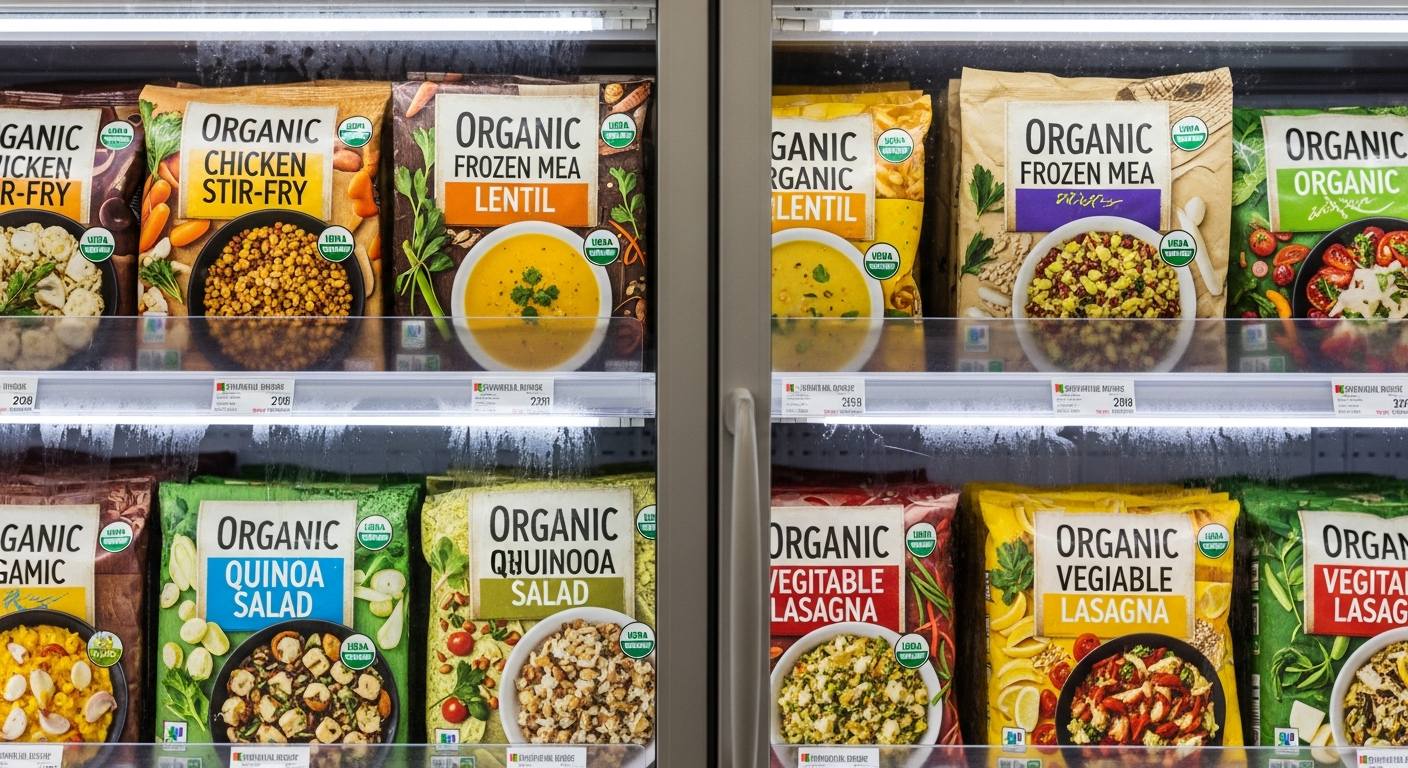
Organic frozen meals are simply ready-to-eat dishes made with organic ingredients and then frozen for later use. They let busy parents serve quick, wholesome dinners without artificial pesticides or GMOs. In fact, by law an “organic” label means at least 95% of the ingredients meet strict organic standards. This generally leads to fewer pesticide residues on your food. In practice, an organic frozen meal might be a homemade soup, stew, or casserole prepared with organic vegetables and proteins, then stored in your freezer. When you reheat it, you get a meal that’s much like fresh-cooked – and just as flavorful – but was ready in minutes on a hectic night.
Why Choose Organic?
Choosing organic ingredients means avoiding synthetic fertilizers, growth hormones, and GMOs. Health experts note that eating more organic foods “exposes consumers to less pesticide residue”. This can be especially important for pregnant women and kids, as high pesticide exposure has been linked to health issues. Organic farming also bans routine antibiotics and added hormones in animal products, so organic chicken, beef, or fish in your freezer means cleaner meat. In other words, an organic frozen meal provides convenience without sacrificing those health-friendly organic standards.
Why Freeze Your Meals?
Freezing meals is a smart way to lock in nutrition and reduce waste. Freezing is literally “a change in temperature” that preserves food, so fruits and veggies often stay as nutritious as they were at harvest. For example, nutrition research shows that frozen produce – picked at peak ripeness – can retain just as many vitamins and minerals as fresh. (Any slight loss usually happens over long storage, so rotate your freezer stash every few months.)
Freezing also makes life easier. Imagine this: on a Sunday you batch-cook a big pot of chili or lentil soup. You portion it into containers or bags and freeze them. Later in the week, you (or anyone in the family) just grab a container from the freezer, heat it up, and dinner is ready in under 10 minutes. As Harvard health experts advise, plan ahead so that when a meal is needed “you’ll want to take something out of the freezer and have it ready in five or 10 minutes”. This approach saves time on busy school nights and means fewer takeout dinners.
Frozen meals also cut down on waste and can stretch your grocery budget. Proteins, vegetables, and sauces can last weeks or months frozen, whereas fresh produce might spoil in days. One food-industry expert points out that the long shelf life of frozen foods greatly reduces food waste. In short, freezing means you cook once and enjoy twice – and you save money by buying in bulk or using up leftovers.
Store-Bought vs. Homemade
You can buy pre-made organic frozen meals from brands (think organic burritos, soups, or pasta meals). These often use many clean ingredients, but they can be pricey and sometimes high in sodium. Whether homemade or store-bought, read labels carefully: dietitians recommend choosing frozen entrees with few ingredients, lots of real veggies or whole grains, and minimal added salt or sugar. As one expert puts it, “the fewer ingredients, the better, and make sure that real foods are on the list”.
Making your own organic freezer meals at home gives you more control. You can load up on vegetables, choose lean proteins, and season lightly. You’ll also avoid unwanted additives. As one food blogger notes, homemade freezer soups and stews can be “just as flavorful as they were on the day they were made”. Plus, DIY meals often cost less – you can cook once and serve multiple family-sized portions. As Harvard nutritionists summarize: having healthy foods on hand “just takes a little planning… it’s healthier, and it’s cheaper, too”.
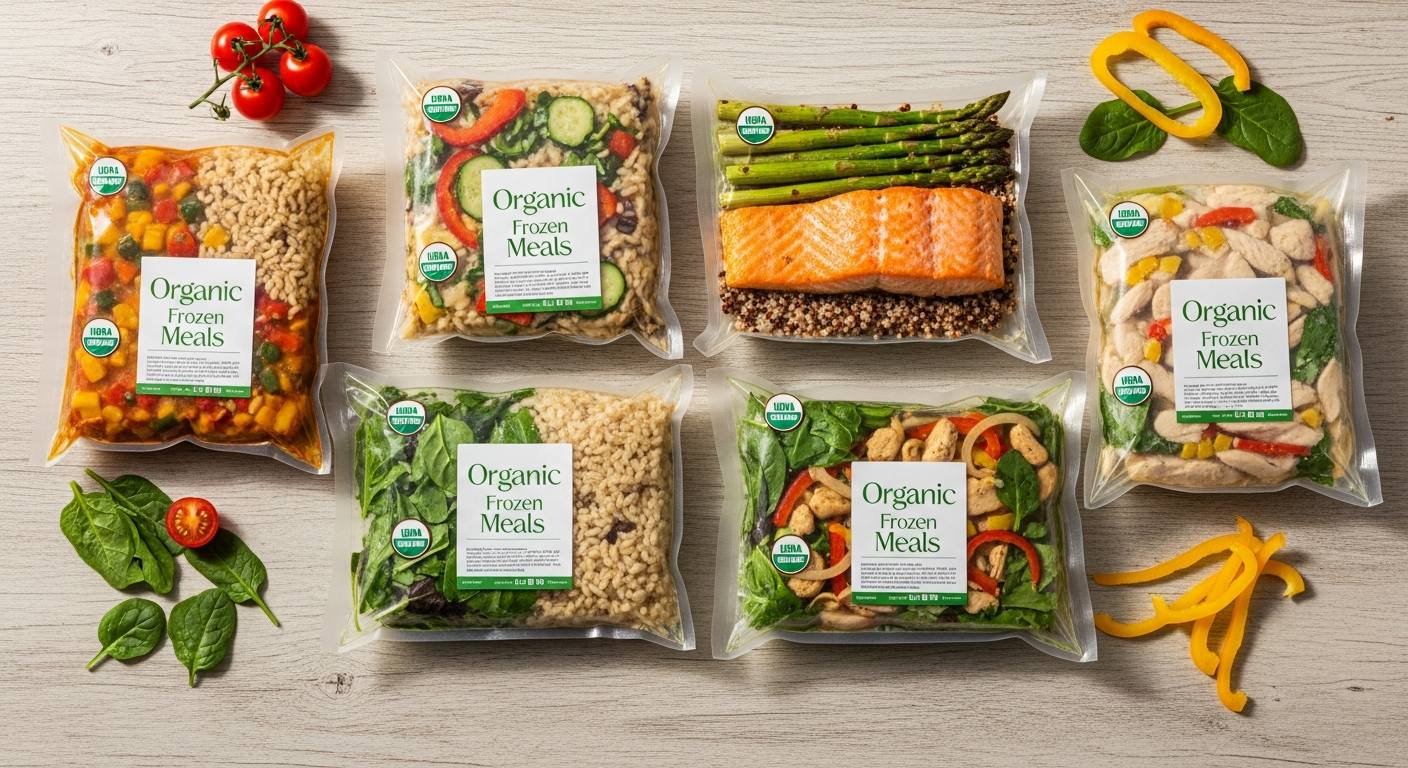
Making Your Own Organic Freezer Meals
Making organic freezer meals is easier than you might think. Here’s a simple approach:
-
Batch cook: Choose recipes that freeze well, such as organic soups, stews, chilis, or casseroles. Prepare a large pot or baking pan of the dish.
-
Portion it out: Divide the finished food (or raw ingredients for slow-cooker meals) into meal-size portions. Use freezer bags or airtight containers. Remove as much air as possible to prevent freezer burn.
-
Label and date: Write the contents and date on each bag/container. Plan to use most meals within 2–3 months for best quality.
-
Freeze flat: Lay bags flat in the freezer so they freeze in thin layers. This saves space and speeds up thawing later.
Examples of organic freezer meals: Soups and stews (organic vegetable soup, lentil curry, chicken noodle), chilis (turkey or bean chili), casseroles (lasagna with organic spinach, black bean enchiladas), and slow-cooker mixes (raw organic chicken + sauce). You can also prep sides or breakfasts: freeze cooked grains like quinoa or brown rice, veggie burgers, or even organic smoothie packs (frozen berries, bananas, and kale) to blend in the morning.
Tips for Success
-
Use quality containers: Buy sturdy, freezer-safe bags or containers. Double-bag liquids or sauces to avoid leaks.
-
Thaw safely: For best texture, thaw frozen meals in the fridge overnight before reheating. Soups and sauces can usually be poured from frozen into a pot or slow cooker.
-
Cook from frozen when needed: Some meals (especially in a slow cooker) can go in frozen. For example, toss a frozen stew bag into the crockpot in the morning, and hours later it’s ready to eat.
-
Season wisely: Remember that freezing can dull very strong spices. Season lightly before freezing and adjust seasoning after heating if needed.
-
Check nutrition: Even organic meals can be high in salt or fat if you add too much. Taste as you cook, and consider adding salt after reheating rather than before freezing.
By following these steps, you can build a freezer stocked with homemade, organic meals. When dinner time comes, you’ll simply reheat a portion and have a healthy, home-cooked dinner on the table. This strategy works any time of year or schedule: as one dietitian advises, “It just takes a little planning. But in the long run, it’s healthier, and it’s cheaper, too”.
Enjoy Healthy, Homemade Convenience
In summary, organic frozen meals combine the best of both worlds: the wholesomeness of organic ingredients and the convenience of ready-made food. They help health-conscious parents feed their families well on busy days. With a bit of planning and simple recipes, anyone can make delicious organic freezer meals at home. Over time you’ll gain confidence in stocking your freezer with nutritious options, knowing they’re both tasty and good for you.
By choosing organic and homemade, you’re making a trustworthy choice: fewer pesticides, no artificial additives, and plenty of fruits and veggies in each meal. As long as you watch labels (organic or not) and focus on real ingredients, frozen meals can definitely be part of a healthy lifestyle. Whether grabbing a quick dinner after piano practice or packing a healthy lunch, your organic freezer stash will keep everyone happy, well-fed, and stress-free.