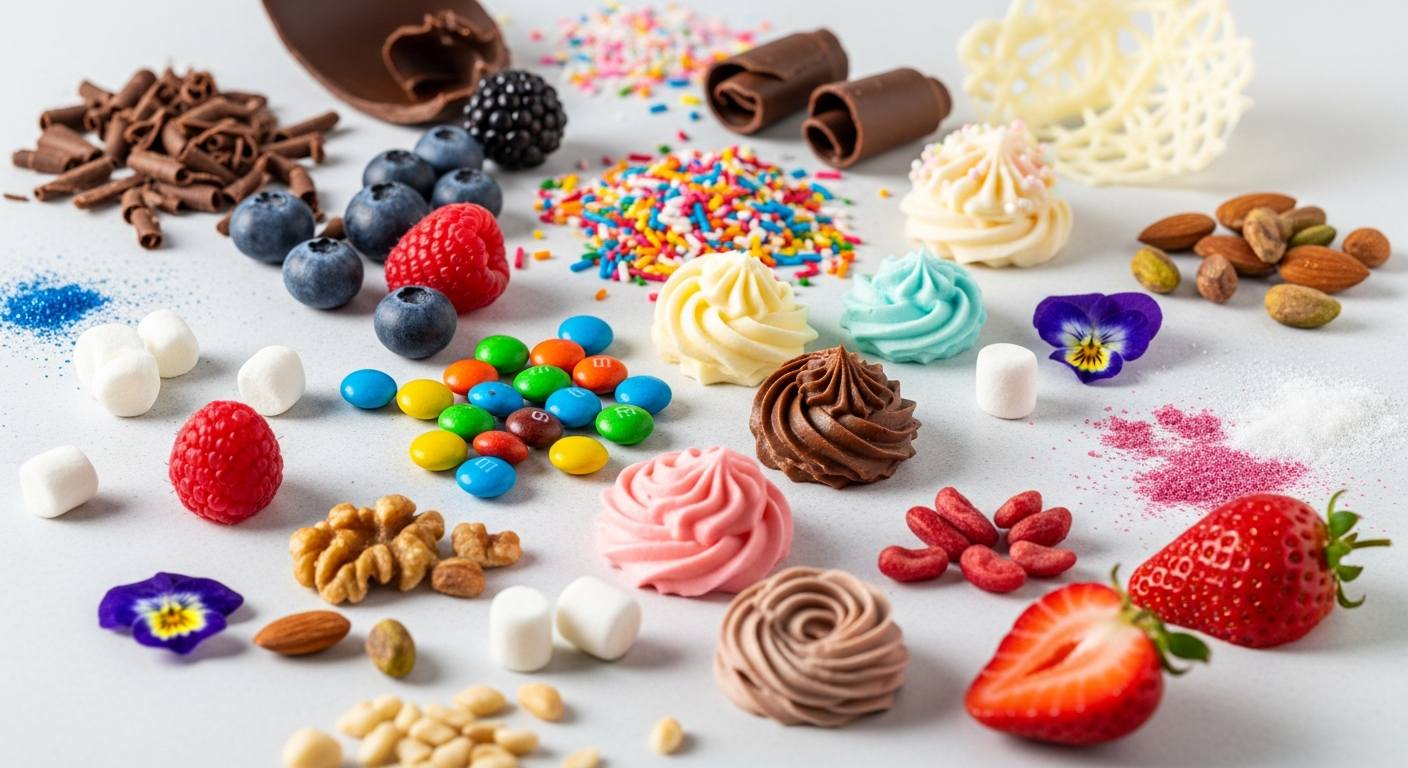
Edible cake toppings are anything you can safely eat that decorates and flavors a cake – from frosting and fruit to sparkly sprinkles and even gold leaf. In other words, edible toppings transform a plain cake into a beautiful, delicious centerpiece. You might top your cake with a smooth buttercream or ganache frosting, pile on fresh berries, scatter colorful sprinkles or dragees, and even add shiny edible flowers, gold leaf, or custom image decals. These toppings not only taste great but also add texture, color, and fun to every slice. Whether you’re a beginner baker or have made many birthday cakes, there are endless creative edible toppings for cakes to explore.
Classic Frostings and Drips
A great starting point is the frosting itself, which is also an edible topping. Buttercream frosting is a classic – it’s made with butter and sugar and can be piped into rosettes, ruffles, or swirls to dress up a cake. Buttercream is highly versatile: you can flavor it (vanilla, chocolate, espresso, lavender, etc.) and color it any hue. For a professional look, pipe decorative borders or patterns with a star or round tip. Chocolate ganache (melted chocolate plus cream) is another indulgent topping: pour it over the cake edges to create a glossy “drip” effect. Ganache gives a rich, mirror-like finish that pairs especially well with chocolate or red velvet cakes. Finally, whipped cream frosting (sweetened chilled cream) is light and fluffy – it’s perfect for summer cakes or “naked” cakes topped with fruit. Whipped cream is easy for kids to spread and complements fresh berries or tropical flavors.
Frosting and glaze tips:
-
Buttercream: Creamy and easy to pipe into roses, shells, or basketweave patterns. Blend in food coloring for fun ombré or watercolor effects.
-
Chocolate ganache: Poured warm to drip over the cake edges, creating a dramatic, glossy look. Use a spoon or squeeze bottle for control.
-
Whipped cream: Chill it well and whip to stiff peaks; it makes a light topping that “melts” on the tongue. Great with fruits or sprinkled nuts.
Sprinkles, Sugars and Candy
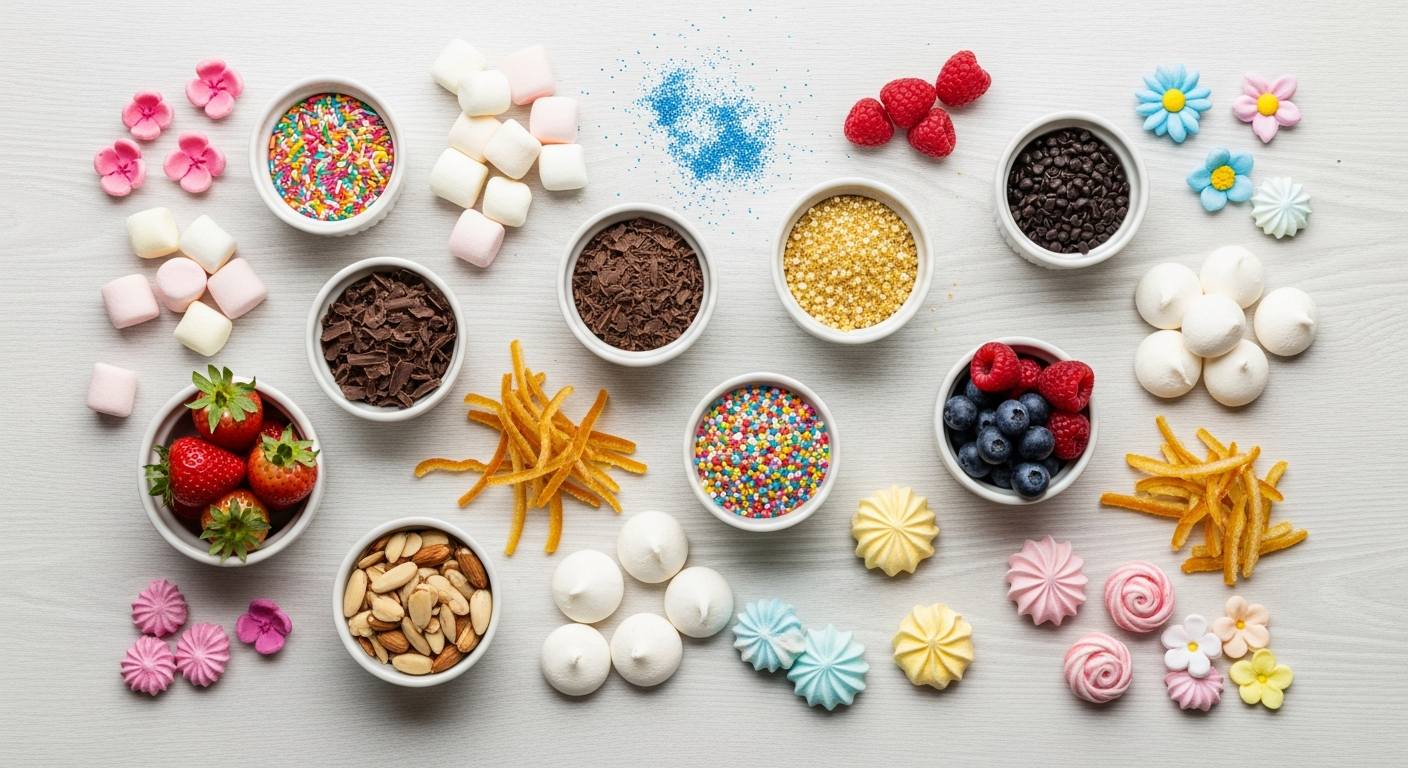
Sprinkles and small candies are the easiest way to make a cake look fun and festive. Sprinkles (jimmies, confetti, nonpareils, quins) come in every color and shape. You can press them into the sides of a frosted cake or simply shower them on top for instant charm. Mrs. Fields suggests mixing sprinkles into the cake batter and then pressing extra sprinkles onto the iced cake for a bright, textured finish. Sugar pearls and dragees (tiny shiny balls) add an elegant, pearly touch – try lining them around the cake base or as centers of piped flowers. Crystal sugar (large, sparkling sugar) gives a gem-like crunch. For chocolate cakes, curls or shavings of chocolate (made with a vegetable peeler or grater) lend a simple but sophisticated look.
You can also use larger candies or mix-ins: mini candies, gummy bears, or candy bars can sit right on top or be chopped and sprinkled over icing. The Damask Cakes blog notes using colorful candies to form mosaics or patterns and even arranging truffles or caramel candies strategically. For example: line chocolate-covered pretzel sticks upright for a “fence” of crunchy saltiness, or cluster berries and gummy worms for a playful scene. Even marshmallows or mini donuts can be edible toppers in fun themes.
-
Sprinkles and nonpareils: Toss a mix on a frosted cake for a confetti effect. Rainbow or themed color mixes are great for birthdays.
-
Sugar pearls (dragees): Metallic or pastel balls that add shimmer. Adhere them with a dab of frosting.
-
Chocolate curls/shavings: Peels of dark or white chocolate, laid in swirls atop the cake. Easy yet elegant.
-
Candy pieces: Gumballs, mini Oreos, cookie pieces, or cocktail cherries can all crown a cake. The bolder and brighter, the more eye-catching.
Fresh Fruit and Natural Toppings
Nothing is more refreshing than fresh fruit on a cake. Vibrant berries (strawberries, raspberries, blueberries) not only taste delicious but “add vibrant color and juicy texture” to your cake. Try slicing strawberries in half to lay on a white-frosted cake, or arrange raspberry and mint sprigs in a pattern. Other fruits like kiwi, mango, pineapple, orange or lemon slices bring tangy flavor and bright contrast. For tropical flair, you might fan out dragon fruit slices or cluster grapes. The Damask Cakes guide also encourages exotic/tropical fruit (passionfruit, dragon fruit) for a tangy twist that keeps the design interesting.
Dried fruits and nuts add a rustic look: think dried orange wheels, apple chips, or figs, which look lovely on buttercream and have a chewy texture. Toasted coconut flakes or almond slivers offer nutty crunch and make the cake feel “rustic or modern”. And don’t forget edible flowers! Safe blossoms like violets, pansies, rose petals or hibiscus bring an elegant garden touch. Organic, pesticide-free flowers can be placed whole or petal-by-petal. Brush them lightly with jelly for extra gloss, or use petals to scatter a frosted cake for a delicate polka-dot effect.
-
Fresh berries and fruit: Whole or sliced berries (strawberry, raspberry, blackberry) arranged on top. Citrusy slices (lemon, orange) look pretty and add acidity.
-
Tropical fruit: Kiwi rounds, mango cubes, or dragonfruit bits for color contrast.
-
Dried fruit & nuts: Ornament slices of dried citrus, sugared cranberries, toasted coconut, chopped pistachios or almonds for earthy hues.
-
Edible flowers: Pansies, nasturtiums, lavender and rose petals make a cake truly “wow,” adding color and charm. (Just rinse them well!)
Tulip Chocolate notes that “Fruits are the easiest ingredients to decorate your cake” because they’re naturally tasty and decorative. So don’t be shy – berries piled high make a beautiful cake topping and please kids and adults alike.
Fondant, Wafer Paper and Custom Shapes
For more elaborate cakes, fondant and custom cut-outs are key edible toppings. Fondant is a pliable sugar paste you can roll out to cover a cake or shape into figures. Use fondant to create flowers, bows, or themed shapes (animals, stars, logos) that sit atop the cake. Cut fondant with cookie cutters or mold it by hand into characters. A thin coating of buttercream or piping gel helps the fondant stick to the cake. Because fondant dries firm, you can also make standing elements like large letters or 3D shapes.
Edible images and prints: Any photo or design can become an edible cake topper with icing sheets. These thin frosting sheets absorb edible ink, so you print pictures (a kid’s photo, a cartoon, or a custom message) on them and lay them on fondant or buttercream. For example, you might print a family photo on icing and smooth it on top of a cake for birthdays. The sheet will blend into the frosting, effectively “printing” your design. Bakers often trim these images with scissors or use edible glue to layer them for multi-part toppers.
Gilded and glittery accents: To make a cake really shine, use edible glitter/dust and metallic leaf. Edible glitter (made from edible mica or sugar) can be sprinkled on frosting for sparkle – unlike craft glitter, it’s FDA-approved and food-safe. Luster dusts (fine metallic powders) brushed on fondant or mixed with a little alcohol to paint on give a pearl or gold sheen. Best of all is real gold or silver leaf: ultra-thin 24K gold leaf can be gently applied to frosting or chocolate for a glamorous touch. It looks as luxurious as it sounds – Luxe Cake confirms their edible gold leaf is “100% safe for consumption” and creates a vivid metallic sparkle. Just use a dry paintbrush or tweezer to lay leaf pieces onto your cake for a high-end finish.
Wafer paper: This is another paper-like edible sheet (made from potato starch) that’s fully edible. You can cut or punch wafer paper into shapes – butterflies, leaves, or banners – and adhere them to frosting. It’s very light and dissolves in the mouth (tastes like a bland starch). For example, print an edible pattern on wafer paper or paint it with color and curl it into petals. Sticking wafer decorations with a dab of frosting or piping gel lets you add delicate, print-like accents.
-
Fondant cutouts: Roll out fondant and use cutters (letters, hearts, flowers) to make cake toppers.
-
Edible images/inks: Print personal photos or designs on frosting sheets and place them on the cake.
-
Edible glitter & dust: Sprinkle or brush on shimmer powder (made from sugar or mica); it’s food-safe and sparkles without changing flavor.
-
Gold/Silver leaf: Apply small squares of edible gold leaf for instant luxury – it’s 100% edible 24K gold.
-
Wafer paper shapes: Cut designs from wafer paper (“edible paper”) and attach them; it blends in and dissolves.
Creative Techniques and Presentation
How you apply toppings is just as important as what they are. Here are some ideas for creative effects:
-
Piping: Use icing tips to pipe buttercream or whipped cream into roses, rosettes, shells, or lines. Simple dot or shell borders can look very polished. (Damask Cakes suggests that even subtle textures like combed buttercream give a “professional, sculptural touch”.)
-
Drips & Glazes: Warm ganache or colored glaze can be gently dripped or poured over the cake edges for the trendy “drip cake” effec. Let the liquid stream partway down the sides so it puddles artistically.
-
Stenciling and Dusting: Lay a stencil on top of the cake and sift cocoa, powdered sugar, or edible glitter over it. When you lift the stencil, a sharp design appears. This is an easy way to add patterns (stripes, shapes, letters).
-
Chocolate molds: Pour tempered chocolate into molds (letters, curls, figurines), cool until set, then stick the chocolates onto the cake for custom shapes.
-
Mix-and-match: Don’t be afraid to combine toppings. For instance, pipe a ring of buttercream around the top edge and fill it with fresh berries and sprinkles. Or cover a cake with fondant and then drip ganache over it and top with nuts. Damask Cakes suggests pairing contrasting elements (fruit with flowers, chocolate with sugar decorations) to get a “multi-layered masterpiece” effect.
No matter which toppings you choose, always think about balancing flavors. If your cake is very sweet (chocolate fudge, for example), a tart strawberry or citrus accent can brighten each bite. If you go heavy on candy and sprinkles, you might keep the frosting simple. The goal is to make each slice not just pretty but also harmonious in taste.
Conclusion
In summary, edible cake toppings range from simple (buttercream, whipped cream, sprinkles, berries) to elaborate (fondant figures, edible prints, gold leaf). By mixing colors, textures, and flavors, you can turn any homemade cake into a showpiece that tastes as good as it looks. Start with a few favorites – maybe a classic buttercream rose border and a handful of fresh berries – and then experiment from there. With these ideas and tips, even a home baker can decorate like a pro. Most importantly, have fun with it: the best cakes are the ones made with creativity and joy!