
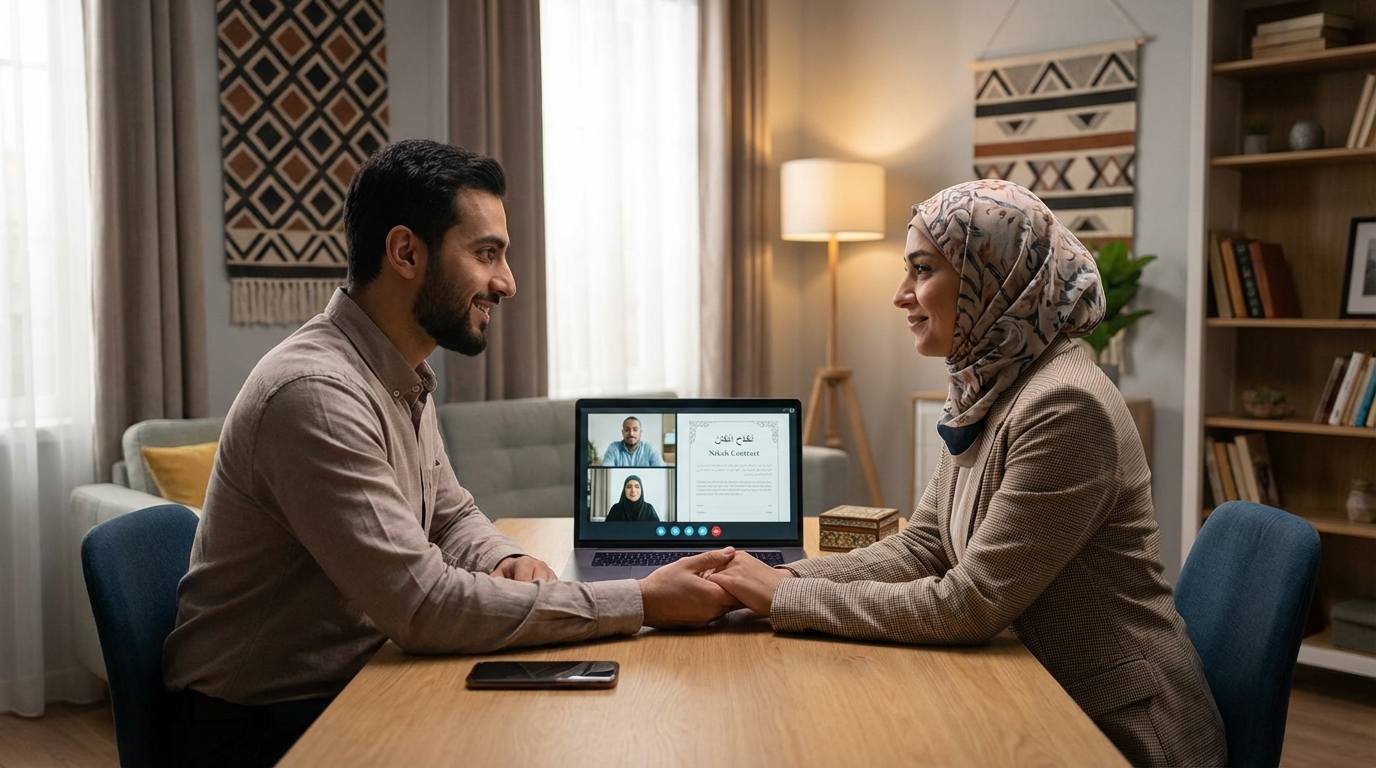
Online marriage simply means using the internet and technology to meet a partner or even carry out the wedding process. In other words, couples might find spouses on matrimonial websites/apps or even have their marriage ceremony via video call. In fact, online marriage sites are on the rise: for example, Zawaj Msyar (also known as ZawagMsyar) is an online platform that connects Muslim singles for marriage (especially Misyar marriages). Such sites often advertise advanced search filters and instant chat to help users browse profiles and communicate securely. These tools make the search easier: as one site notes, “the concept of online marriage has started to replace traditional ways” of meeting for marriage. In short, online marriage embraces everything from digital matchmaking to virtual wedding ceremonies.
What Is Misyar Marriage?
One reason Zawaj Msyar highlights Misyar marriage is because it’s a specific Islamic contract. A Misyar marriage is a legally valid Muslim marriage where both parties agree to waive certain rights that normally come with marriage. For example, the wife may give up her right to live with her husband or receive maintenance, and the husband may waive his right to have her act as his housekeeper. In simple terms, Misyar allows spouses to live apart (often so a woman stays with her family) while still fulfilling the formal marriage contract.
Islamic authorities explain that if all the basic requirements of marriage are met (offer, acceptance, witnesses, no time-limit, etc.), then a Misyar contract is technically valid. However, many scholars urge caution. For instance, Islam Q&A (a respected fiqh website) notes that while no scholar declares Misyar outright invalid, it is often discouraged because it “is demeaning to [the woman]” and can harm family life. Views vary by scholar: Shaykh Ibn Baz and others once allowed it, whereas some (like Shaykh Albani) later called it impermissible. In practice, Misyar marriages are used for various reasons – sometimes to help a divorced or widowed person find a partner without remarrying in the usual way.
Online Marriage Platforms and Services
Beyond Misyar, many general “internet marriage” platforms exist. These range from global matrimony sites to local apps. Such services let users create profiles, set preferences, and search using criteria like age, location, or religious background. For example, the Zawaj Msyar app advertises features like advanced search (to filter partners by detailed criteria) and instant chat so members can get to know each other within the app. Users often have privacy controls too (for instance, hiding a profile photo until they choose to share it). In all cases, the key appeal is convenience: instead of meeting by chance or through family, people search for compatible partners online. Every day, new members join these platforms hoping to find a life partner.
Other platforms may focus on specific communities or countries. But whether it’s a general matchmaking site or one specialized for Muslims (like Zawajmsyar), the principle is the same: connect people safely for the purpose of marriage, not casual dating. Always check that any service you use clearly states its purpose (marriage, not friendship) and provides secure messaging. Reputable sites will have clear contact info, success stories, or reviews, helping you feel more confident about using them.
Legal Status Around the World
Legality of online weddings varies by location. In some places, remote weddings are fully recognized; in others, they may be unofficial or outright prohibited. Here are some examples:
-
United States: Online marriage is legal in several U.S. states. Utah, for instance, offers a government-run online marriage system where you can apply for a license, verify your identity by smartphone, and complete the ceremony with an authorized officiant remotely. In fact, one virtual-wedding provider notes that “as of 2020, online marriage is 100% legal in the US through Utah”. (Utah-issued licenses are valid across the US by federal law.) Meanwhile, during the 2020 pandemic New York temporarily allowed couples to obtain licenses and wed via video conference. A lawyer advises, however, that legality “can vary depending on the state” and urges anyone to check local rules. In general, if your state has provisions for remote weddings or videoconference ceremonies, you can plan to marry online there.
-
Middle East/UAE: Abu Dhabi now offers an official virtual wedding service on its government app (TAMM). For a fee, couples worldwide can choose a time, and then the bride, groom, two witnesses and a licensed officiant all join via a secure video link. The ceremony and paperwork are done online, and the marriage certificate is digitally signed and attested. This pioneering service means even foreigners can legally marry in Abu Dhabi without ever setting foot there, under the supervision of the Abu Dhabi Judicial Department.
-
Other regions: Rules differ. Some countries temporarily relaxed rules during COVID (e.g. India allowed streaming a traditional ceremony to far-away relatives). But many places (like Australia, most of Europe, and many developing countries) do not currently allow solely online weddings – couples must physically sign forms or attend civil ceremonies. Always verify with your local marriage bureau.
Key point: If you plan an online wedding, double-check that your ceremony and license meet legal requirements where you live. In the US, that often means recording the marriage with your local clerk. As one expert notes, even with an online platform you must ensure “the marriage is properly recorded and filed with the appropriate government authorities” for it to be recognized.
Steps to Getting Married Online
If you decide to marry online, here are general steps to follow (requirements differ by place):
-
Check legality and rules. Verify that your state or country allows remote weddings. In the US, look up your state’s laws (for example, Utah or other states may permit it). Some places only allow an in-person process, so confirm first.
-
Obtain a marriage license online. If allowed, apply for a license through the official channel. For instance, Utah County’s online system lets both partners fill out one license form on any device, verifying IDs and paying the fee digitally. Follow the exact instructions (you’ll need a smartphone or webcam, government IDs, and a valid form of payment).
-
Choose an officiant (online or local). You’ll need a licensed officiant to conduct the ceremony. This could be a friend who is ordained (and approved by your state) or a professional online service. Some sites (like Courtly or remotevows.com) connect you with a licensed officiant who can lead the video ceremony. The officiant must sign off on your license paperwork.
-
Hold the video ceremony. On the scheduled date, gather via video call. You, your witnesses (if required) and the officiant all participate from separate locations. The officiant will say the usual vows, hear each party say “I do,” and witness will sign virtually. Once that’s done, the officiant will finalize the document.
-
File the marriage certificate. After the ceremony, ensure the marriage is officially recorded. The officiant or couple must submit any signed license to the marriage bureau (often by mail or electronically). This step is crucial: as one attorney puts it, you must get the certificate filed so the marriage is legal and recognized.
Each jurisdiction’s exact process varies, so always follow your local instructions. But overall, an “online wedding” can follow the same steps as a normal one, just completed over the internet.
Safety and Trust Tips
Marrying online can work well if you stay cautious and protect yourself. Consider these tips:
-
Use reputable sites/services. Stick to well-known platforms or official government apps. Read reviews or success stories. For example, Zawaj Msyar’s “Successful Stories” page shows couples thanking the site for bringing them together (suggesting many real connections have happened).
-
Keep communication on the platform. Use the site’s built-in messaging until you’re sure about the other person. Don’t immediately share personal contact info, home address, or financial details. Only give sensitive information after trust is well established.
-
Verify identity by video. Early in conversation, ask for a video call. Seeing and hearing someone live helps confirm they match their photos and profile. As experts say, video calls are crucial because they let you “verify the identity of your potential partner” before meeting in person.
-
Watch for red flags. Be wary if someone’s story keeps changing, if they refuse video calls, or ask for money. Legitimate spouses-to-be will understand your caution and be willing to prove who they are (for example, by also video calling you).
-
Meet safely. When it’s time to meet face-to-face, always choose a public place and let a friend or family member know your plans. (This is good practice for any dating scenario, online or offline.)
-
Use privacy controls. Many marriage sites let you hide photos or personal details until you connect. For instance, Zawajmsyar allows you to hide your profile picture so only matches you approve can see it. Use these features to protect your privacy.
By being prudent and taking these steps, you can build trust with your match and avoid common pitfalls in online matchmaking.
Conclusion
Online marriage – from search to ceremony – opens up new possibilities for people seeking partners. Whether you’re using a Muslim matrimonial site like Zawaj Msyar or planning a Zoom wedding through a licensed officiant, this digital route can be legitimate and meaningful. Just be sure to understand the rules (in Islam and in law), stay safe online, and follow the official process for your area. With care and honest communication, finding and marrying a life partner online can be a modern but authentic path to matrimony.
