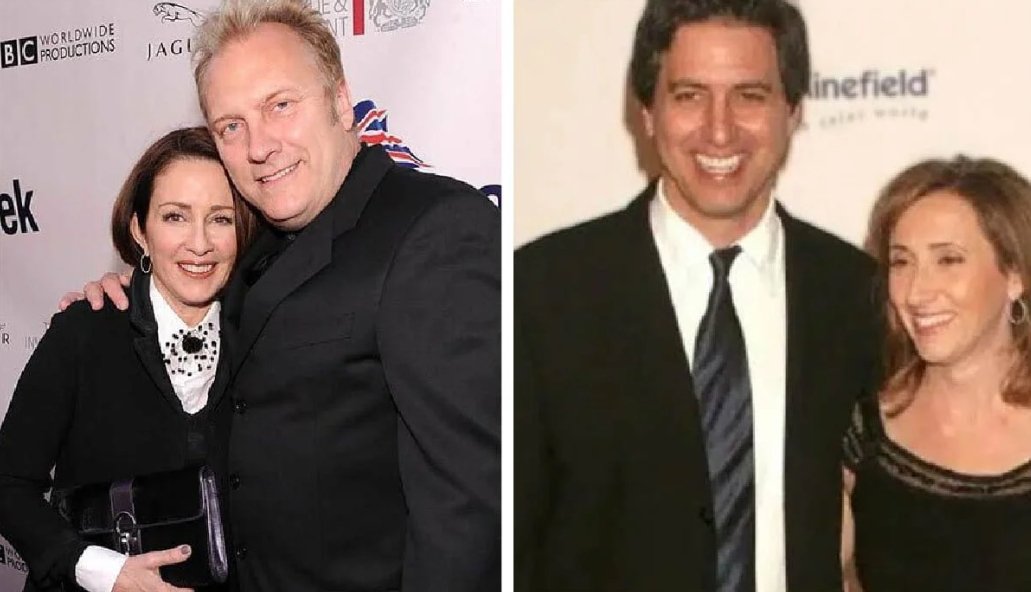
Constantine Yankoglu was the first husband of actress Patricia Heaton, married to her from 1984 until their divorce in 1987, a decade before she became famous on Everybody Loves Raymond. That much is documented and confirmed. Beyond it, though, a surprising amount of what circulates online about him, his birthdate, his hometown, even how the couple met, traces back to no verifiable source at all. This piece separates the two: what the record actually shows, and what’s just been repeated until it sounded true.
What’s Actually Verified
Start with the confirmed facts, because they’re fewer than most articles on this topic suggest.
The marriage itself is well-documented. Wikipedia’s entry on Patricia Heaton lists Constantine Yankoglu as her first spouse, married in 1984 and divorced in 1987. Older biographical references, including a Gale/Encyclopedia.com contributor entry on Heaton from years before she became a major search-engine topic, confirm the same dates independently. When two sources with different purposes and different eras agree on the same specifics, that’s a reasonable basis for calling something established fact.
He has one confirmed screen credit. Under the name “Charles Yankoglu,” he appears in the cast list of Eight Men Out (1988), John Sayles’ film about the 1919 “Black Sox” World Series scandal. This isn’t a rumor, it shows up consistently across IMDb, AllMovie, and other film databases. It’s worth being precise about what the role actually was, though: he’s credited as “New Jersey Fan,” an extra part with no lines of dialogue, not a supporting or starring role. Describing it as anything more dramatic than that overstates it.
Patricia Heaton has spoken about the aftermath, if not the marriage itself. In interviews over the years, Heaton has referred to the period following her first divorce as a kind of “Protestant wilderness”, a stretch where she drifted from the Catholic faith she was raised in. As of June 2017, according to Wikipedia’s sourced biography, her first marriage was formally annulled by the Catholic Church, which allowed her to return to practicing Catholicism. She has never, in any interview on record, gone into detail about Yankoglu as a person or what led to the split.
What’s Repeated Everywhere but Never Actually Sourced
This is the part most coverage of Constantine Yankoglu skips, and it’s arguably the more useful thing to know if you’re trying to understand who he actually was.
A specific birthdate (February 2, 1954) and birthplace (Fayette, Kentucky) show up across dozens of biography-style pages about him. So does the claim that he and Heaton were high school sweethearts. None of these details appear in Heaton’s Wikipedia page, in the older Gale biographical reference, in any interview transcript, or in any news archive. They don’t appear to come from a public record, a court filing, or an interview, they appear, as far as can be traced, to have originated on one low-authority site and then been copied, slightly reworded, and republished across a long list of similar-looking pages.
That’s a common pattern with people who briefly intersect with someone famous and then step away from public life: because there’s real curiosity but almost no actual documentation, specific-sounding “facts” tend to get invented to fill the gap, and then repeated confidently enough that they start to look sourced. It’s worth treating a birthdate or hometown you can’t trace to an original document, a birth record, a marriage license, a contemporaneous news item, as unconfirmed, no matter how many places repeat it.
Why the Annulment Detail Matters More Than It Looks
Most coverage mentions Heaton’s 2017 Catholic annulment as a passing footnote. It’s worth actually explaining what it means, because it’s the one piece of this story that says something real.
A civil divorce ends a marriage’s legal standing. A Catholic annulment is a different process entirely, it’s a canonical ruling that a marriage, despite being legally valid, didn’t meet the Church’s conditions for a valid sacramental union at the time it was entered into. It doesn’t erase that the marriage happened; it changes how the Church regards it going forward, and it’s typically sought by someone who wants to remarry within the Church or return fully to receiving its sacraments.
Heaton pursuing this three decades after the divorce tells you something her public comments only gesture at: that stepping away from the Church after her first marriage ended wasn’t a small or casual thing for her, and that resolving it mattered enough to go through a process that can take years and requires cooperation or testimony about the original marriage. It’s a more concrete data point about how she experienced that period than the “wilderness” description alone.
Where Constantine Yankoglu Is Now
Here the honest answer is: nobody publicly knows, and no reliable source claims otherwise. There’s no interview with him on record, no social media account confirmed to be his, and no public appearance tied to Heaton’s career at any point since 1987. Any article claiming to know his current occupation, location, or relationship status is speculating, and typically not saying so.
That absence of information isn’t a mystery to be cracked. It’s fairly ordinary. People who have a brief, early connection to someone who later becomes famous often just live private lives afterward, without ever engaging with the public interest that follows their former partner. Nothing about the confirmed record suggests otherwise here.
Conclusion
Constantine Yankoglu married Patricia Heaton in 1984, divorced her in 1987, and appeared as an extra in Eight Men Out the following year under the name Charles Yankoglu. Heaton later described the years after their divorce as spiritually difficult and had the marriage annulled by the Catholic Church in 2017. Everything else commonly reported about him, his exact birthdate, hometown, and how the relationship began, isn’t backed by any source that can actually be traced, and is best treated as unverified until it is.